The short answer
For commercial premises in the UK, the widely followed recommendation is that a fire alarm system should be inspected and serviced by a competent person at least every six months, with a weekly test carried out in house between visits. The six month figure comes from BS 5839-1, the British Standard for fire detection and fire alarm systems in non domestic buildings. Many organisations choose quarterly visits where the system is large, the building is high risk or an insurer asks for it.
That is the headline. The rest of this guide explains where these intervals come from, what each type of check involves and what can go wrong if servicing slips.
Every building is different. Use this as a general guide, then check your own fire risk assessment and any licence conditions for exactly what applies to your premises.
Where the six months comes from
For business and other non domestic premises, fire safety is the responsibility of whoever runs or controls the building, usually the employer or owner. In simple terms, you are expected to keep your fire safety equipment, including the fire alarm, properly maintained and in good working order.
There is no exact service interval written down anywhere. What is expected is a suitable system of maintenance, which leaves open the question of what suitable actually means. That is where the British Standard comes in.
In practice, following BS 5839-1 is the accepted way to show your maintenance is up to scratch. Fire risk assessors, inspectors and insurers all treat it as the benchmark, which is why its recommendations carry weight even though it is guidance rather than a rule in itself.
What BS 5839-1 recommends
BS 5839-1 recommends that fire detection and alarm systems in non domestic premises are inspected and serviced periodically by a competent person, at intervals not exceeding six months. The 2025 edition of the standard keeps six months as the target but allows a little flexibility, so a visit five to seven months after the last one is still compliant. Over the course of the year, the servicing programme should cover every device on the system, so each detector and call point gets checked, not just a sample.
The standard also expects routine testing between service visits, which is where the weekly test comes in, covered below. A typical servicing calendar for a commercial building looks like this:
| Check | How often | Who does it |
|---|---|---|
| Manual call point test | Weekly, using a different call point each week | A member of your own staff |
| Inspection and service | At least every six months | A competent fire alarm engineer |
| Full annual coverage | All devices tested across the year's visits | A competent fire alarm engineer |
Some buildings justify shorter intervals. Large addressable systems, premises with sleeping risk such as hotels and care settings, and sites with a history of faults or false alarms are often serviced quarterly. Your fire risk assessment and your servicing provider should agree the right frequency for your building.
Weekly checks you can do in house
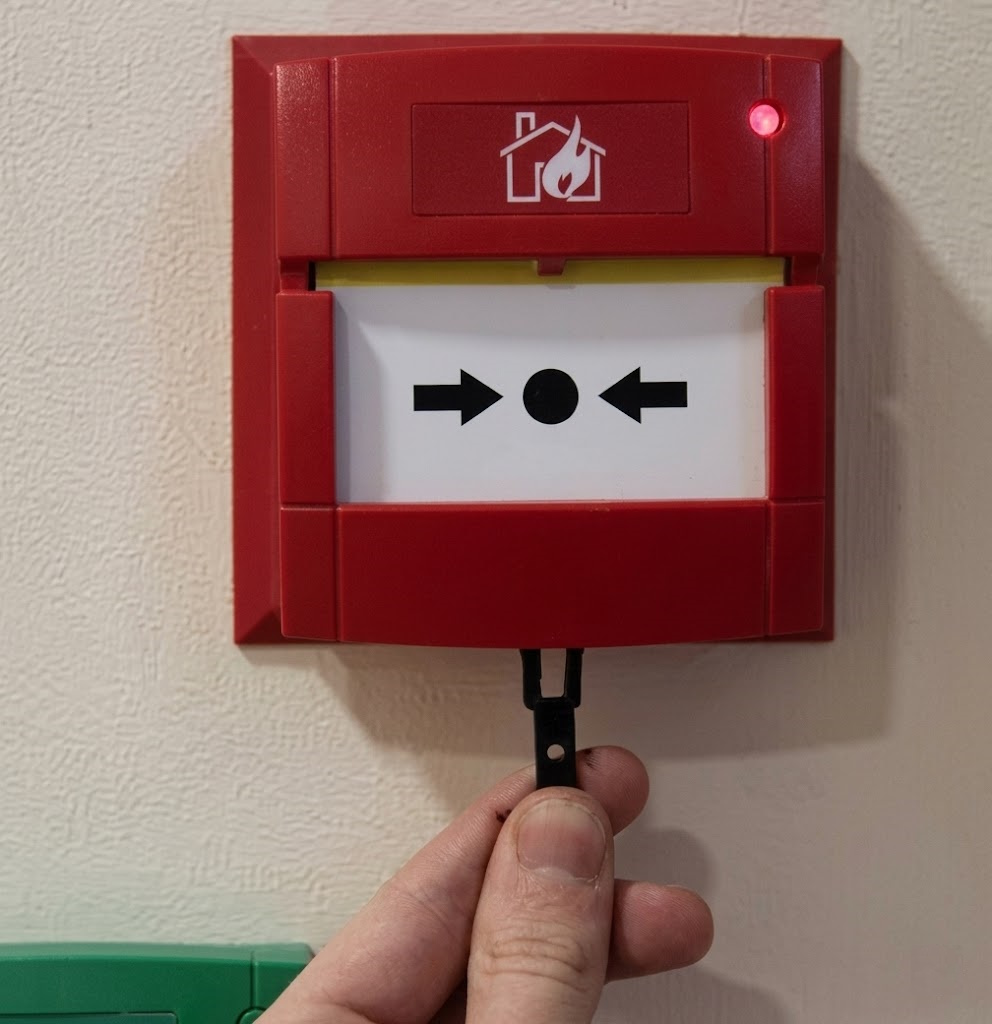
The weekly test is straightforward and does not need an engineer. Once a week, at roughly the same time, a manual call point is operated, normally with a test key, to confirm that the panel receives the signal and the sounders operate. Use a different call point each week so that every one on the premises is tested in rotation, and record the test in the fire alarm logbook.
Pick a regular time and let people in the building know, so a short, expected ring does not get treated as a real alarm. Alongside the weekly test, it is good practice to glance at the panel daily to check it shows normal operation and to report any fault indications promptly.
What happens during a professional service visit
A routine service visit is more than pressing a button. A competent engineer will typically:
- Review the logbook, including faults, false alarms and any periods of disconnection
- Visually inspect the panel, batteries and power supplies
- Check standby battery condition and charging
- Test a proportion of detectors and call points, so all devices are covered across the year
- Check sounder operation and audibility
- Confirm any cause and effect functions, such as door releases, operate correctly
- Record the work and issue an inspection and servicing certificate
Keep the certificates with your fire safety records. They are the evidence that your maintenance regime exists, and they are the first thing a fire risk assessor or enforcing officer will ask to see.
Servicing in homes and HMOs
Dwellings are covered by a separate part of the standard, BS 5839-6, which sets out grades and categories of system for houses, flats and HMOs. For ordinary homes with mains powered smoke alarms, the practical routine is to test the alarms regularly using the test button and to replace them in line with the manufacturer's guidance, since detectors have a limited working life.
HMOs are a different matter. Licensed HMOs commonly have Grade A systems, which are panel based systems similar to commercial installations, and these should be serviced periodically by a competent person in the same way as commercial systems. Licence conditions often refer to servicing and testing records, so landlords should keep a logbook and certificates exactly as a business would. If you own rented property in West London, our Uxbridge fire alarm page covers the local HMO work we do.
What happens if you miss a service?
Nothing dramatic happens on the day a service falls overdue, which is exactly why it is easy to let slip. The consequences appear later, and they can be expensive:
- Compliance findings. An out of date servicing record is one of the most common actions raised by fire risk assessments and inspections, and an enforcing authority can require you to put it right.
- Insurance questions. Insurers may ask for maintenance records after an incident. Gaps in servicing can lead to difficult conversations at the worst possible time.
- Undetected faults. Detectors age, batteries degrade and buildings change. Without servicing, the first sign of a problem can be a system that fails when it is actually needed, or a run of false alarms that staff start to ignore.
- Higher repair costs. Small issues found at a routine visit are usually cheap to fix. The same issues left for years often are not.
The fix is simple: put servicing on a schedule with a provider who reminds you when visits are due, so the interval never depends on someone remembering.
Frequently Asked Questions
Is a six monthly fire alarm service a legal requirement?
The six month interval comes from BS 5839-1, the British Standard, rather than from a specific law. You are expected to keep fire safety equipment properly maintained, and following BS 5839-1 is the accepted way to show you are doing that. In practice, fire risk assessors, inspectors and insurers generally expect to see servicing at least every six months.
Can I service my own fire alarm system?
You can and should carry out the weekly test in house, and anyone sensible can keep the logbook up to date. The periodic inspection and service, however, should be carried out by a competent person, meaning someone with the training, experience and equipment to test and maintain fire detection systems properly. For most organisations that means using a fire alarm servicing provider.
How long does a fire alarm service take?
For a small system, a routine service visit typically takes one to two hours. Larger addressable systems with many devices take longer because a proportion of devices is tested at each visit. Your provider should be able to give you a reliable estimate once they have seen the system or its records.
How much does fire alarm servicing cost in the UK?
Costs vary with the size and type of the system, the number of devices and how far the engineer travels, so treat any flat figure with caution. Most providers, including Ignis Secure, will quote a fixed price for a servicing arrangement once they know the system. Ask whether the price includes call outs and minor repairs or only the scheduled visits.
What records do I need to keep for fire alarm servicing?
Keep a fire alarm logbook recording weekly tests, faults, false alarms, periods of disconnection and service visits, along with the inspection and servicing certificates your provider issues. These records are what a fire risk assessor or enforcing officer will ask to see first.
Need help keeping your fire alarm compliant?
Ignis Secure services, tests and repairs fire alarm systems across Uxbridge, Hillingdon and West London, and we set up servicing schedules so visits never fall overdue. If your system is older or no longer fits the building, we also handle fire alarm installation from design through to commissioning.