Electrical Services and EICR Testing in West London
Commercial and domestic electrical work across Uxbridge, Hillingdon and West London — installation, fault-finding, EICR condition reports, landlord certificates and emergency lighting.
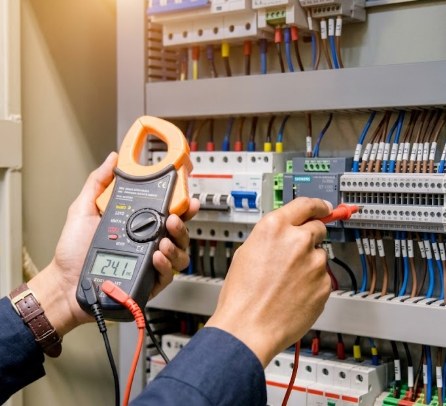
Electrical work from a team that also lives with the consequences
Ignis Secure carries out electrical installation, testing and repair for businesses, landlords and homeowners across West London. Because we also install and maintain fire alarms and security systems, our electrical work is done with the whole building in mind — power for the systems that protect it, wiring that will pass its next inspection, and paperwork that keeps you compliant.
All work is carried out to BS 7671, the IET Wiring Regulations, and certificated, so you have the documents your insurer, licensing officer or buyer will one day ask for.
What our electrical services include
- EICR testing for landlords, businesses and homeowners
- Remedial work on unsatisfactory reports, quoted clearly
- Consumer unit and distribution board replacements
- New circuits, sockets, lighting and rewires, partial or full
- Emergency lighting installation and testing to BS 5266
- Fault-finding and repairs, including tripping circuits
- LED lighting upgrades that cut running costs
- Power and containment for fire alarm, CCTV and access control systems
EICR testing and landlord certificates
An Electrical Installation Condition Report is a formal inspection and test of the fixed wiring in a building. For privately rented homes in England it is a legal requirement at least every five years under the Electrical Safety Standards in the Private Rented Sector Regulations 2020, and letting agents and licensing schemes ask for it routinely. For commercial premises, periodic testing is how the responsible person demonstrates the installation is being maintained.
We test methodically, explain any defect codes in plain English and — unlike test-only outfits — quote for and carry out the remedial work ourselves. For landlords we can combine the EICR with fire alarm and emergency lighting checks in one visit, which is usually cheaper and always less hassle.
Emergency lighting
If the power fails, escape routes still need to be visible. We install, test and repair emergency escape lighting in line with BS 5266, and we can fold routine emergency lighting testing into the same visits as your fire alarm servicing, so one appointment covers both.
Electrical work behind fire and security systems
Every fire alarm panel, CCTV recorder and access control door needs clean, reliable power. When we install a fire alarm, CCTV system or access control, the electrical work is part of the same job — one team, one quotation, nothing falling between two trades.
How we work
-
Survey or inspection
We visit, look at the installation or the job, and confirm what is needed. Surveys and quotations are free and there is no obligation.
-
Written quotation
You receive a fixed, itemised quotation. For EICRs, the price is agreed up front based on the size of the installation.
-
The work
Our engineers work tidily, keep disruption down and keep you informed. Out-of-hours work can be arranged for trading premises.
-
Certification
You receive the certificates and reports for the work — EICR, installation or minor works certificates — for your records and your compliance file.
How much does electrical work cost?
EICR prices depend on the number of circuits; installation work depends on the job. We quote fixed prices in writing after seeing the installation, so the figure you agree is the figure you pay. If a report turns up remedial work, you get a clear itemised quotation for that too — never pressure, just the facts and the price.
Frequently Asked Questions
What is an EICR?
An Electrical Installation Condition Report is a formal inspection and test of a building's fixed wiring — consumer units, circuits, sockets, lighting and earthing — carried out against BS 7671, the IET Wiring Regulations. The report classifies any defects found and states whether the installation is satisfactory for continued use. It covers the fixed installation, not portable appliances.
How often is an EICR needed?
For privately rented homes in England, the Electrical Safety Standards in the Private Rented Sector Regulations 2020 require an EICR at least every five years, with a copy given to tenants. For businesses, five-yearly testing is the common benchmark, though the previous report can recommend a shorter interval for some premises. Owner-occupied homes are typically tested every ten years or at change of occupancy.
What happens if my EICR finds problems?
Defects are coded: C1 means danger present, C2 means potentially dangerous, C3 means improvement recommended, and FI means further investigation needed. C1, C2 and FI items make the report unsatisfactory and need remedial work — for rented homes in England, within 28 days or sooner if the report says so. Because we do the remedial work ourselves, you get one clear quotation to put things right rather than a report and a shrug.
Do you test emergency lighting as well?
Yes. Emergency escape lighting should be tested regularly, with a brief monthly function test and an annual full-duration test, in line with BS 5266. We install, test and repair emergency lighting, and it pairs naturally with the fire alarm servicing we already provide, often on the same visit.
Can you do the electrical work for a fire alarm or CCTV installation?
Yes, and that is one of the main reasons clients use us. Fire alarms, CCTV, access control and intruder alarms all need power supplies, containment and sometimes new circuits. Because we do both the electrical work and the systems themselves, there is one team, one quotation and no gap between two trades for anything to fall into.
Book an EICR or get an electrical quote
Call us or send an enquiry and we will give you a fixed written price — for an EICR, a repair or a full installation. No obligation.