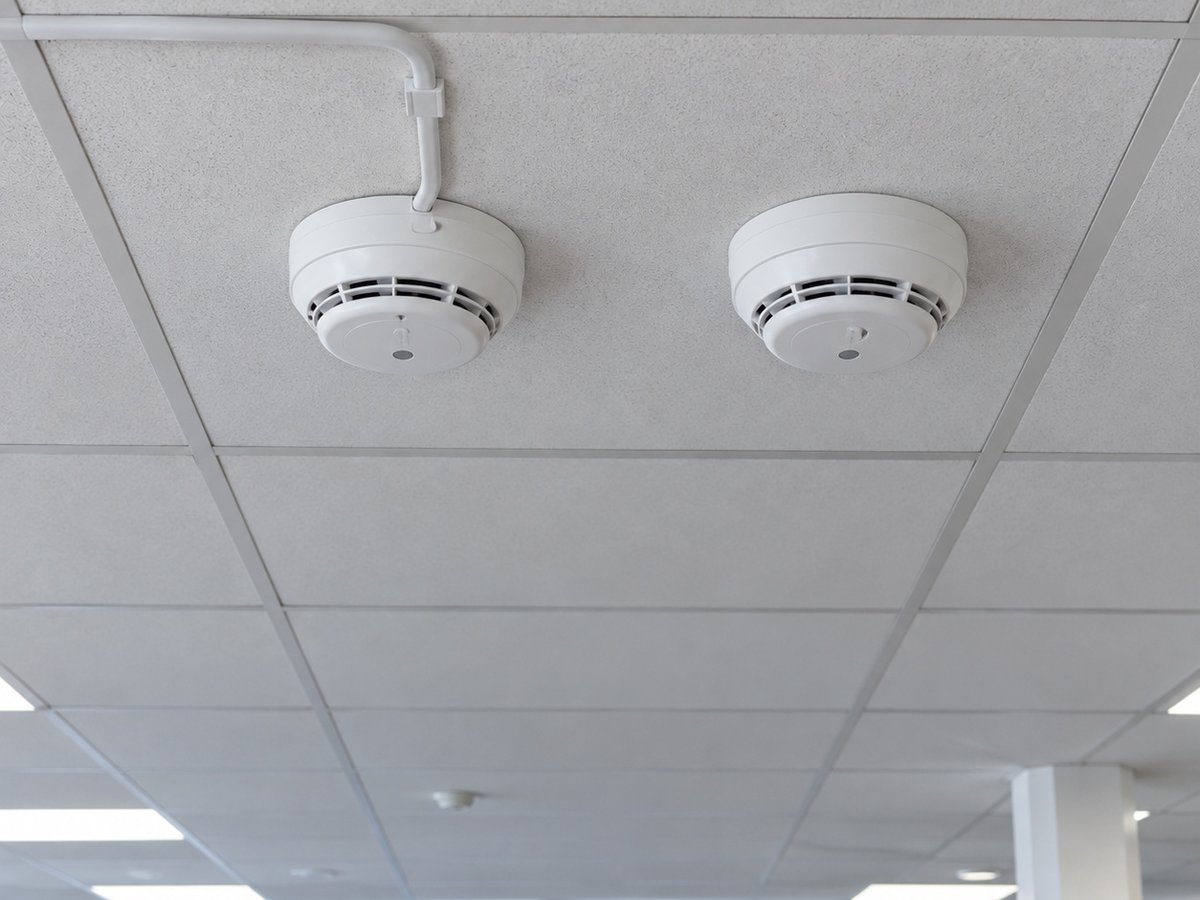
Both types can meet BS 5839-1 and both will protect your building properly. The real difference is how they are installed, what they cost over their life and how much disruption you can live with while they go in. Here is how to choose.
The quick answer
- Wired is usually the better long-term choice for new builds, major refurbishments and large sites.
- Wireless makes sense when cabling would be expensive, disruptive or damaging: occupied buildings, period properties, short leases and quick extensions.
- Hybrid gives you a wired panel with wireless devices where cables are awkward. Often the best of both.
How each system works
Wired systems connect every detector, call point and sounder to the control panel with fire-resistant cable. Power and signals run through the cable, and a backup battery in the panel keeps everything running in a power cut.
Wireless systems use radio to link devices back to the panel. Each device has its own batteries. Good systems use two-way communication and check in with the panel constantly, so a missing or faulty device shows as a fault straight away.
Wireless components should be certified to BS EN 54-25, the European standard for radio fire alarm equipment. If a quote doesn't mention it, ask.
Side by side
| Wired | Wireless | |
|---|---|---|
| Install time | Days to weeks | Often one or two days |
| Disruption | Cable runs, drilling, making good | Minimal. Devices fix to ceiling and walls |
| Upfront equipment cost | Lower | Higher per device |
| Labour cost | Higher | Lower |
| Ongoing cost | Low | Device batteries to replace every few years |
| Reliability | Very high | Very high with a certified two-way system |
| Adding devices later | New cable runs | Quick and simple |
| Moving it to new premises | Not practical | Possible |
| BS 5839-1 compliant | Yes | Yes |
When wired makes more sense
- New builds and shell refurbishments, where walls and ceilings are open anyway
- Large warehouses and industrial units with long, simple cable routes
- Sites with thick concrete or steel that can block radio signals
- Buildings where you want the lowest running cost over 15 years or more
When wireless makes more sense
- Occupied buildings. Offices, shops, schools and care homes that can't close for a messy install
- Period and listed buildings. A lot of our work in Ealing and Harrow is in Victorian and Edwardian buildings where chasing cables through plaster and cornicing damages the fabric, and conservation officers may object
- Short leases. You can take the system with you when you move
- Fast turnarounds. Premises that need to be compliant before opening or re-letting
- Hard to reach areas. Outbuildings, high ceilings and spaces where cable routes are long or awkward
Hybrid systems
A hybrid system uses a wired panel and wired devices where cabling is easy, then adds wireless devices through a radio link where it isn't. It is common for:
- Extending an existing wired system into a new area without new cable runs
- Buildings with one awkward wing, loft or outbuilding
- Phased upgrades where the budget is spread over time
Common worries about wireless
"Is it as reliable?" A certified two-way wireless system monitors every device continuously. Signal loss, a flat battery or a removed detector all show as a fault at the panel, just like a cut cable would on a wired system.
"What about battery changes?" Device batteries typically last several years, depending on the system. The panel warns you well before one runs out, and your engineer can swap them at a routine service.
"Will the building interfere with the signal?" It can. That is why a proper radio survey should be done before installation. It checks signal strength at every device location, and any weak spots are fixed with repeaters or a wired device.
"Does it need servicing differently?" No. Same rules: a weekly user test and a service at least every six months. See how often fire alarms should be tested and serviced.
Wireless fire alarms in West London
Ignis Secure is based in Uxbridge and installs wired, wireless and hybrid fire alarm systems across West London. Wireless is increasingly popular with our customers in:
- Ealing, where many businesses and HMOs occupy older buildings with decorative ceilings (fire alarm installation in Ealing)
- Harrow, with a mix of converted houses, schools and high street retail (fire alarm installation in Harrow)
- Uxbridge, where offices and shops often need systems fitted around trading hours (fire alarm installation in Uxbridge)
We also cover Hayes, Hillingdon, West Drayton, Ruislip, Southall, Greenford and Hounslow.
We start with a site visit and, for wireless, a radio survey. You get a clear written quotation that sets out the options, so you can compare wired, wireless and hybrid on cost and disruption before deciding. Get in touch or see our fire alarm installation page.
Frequently Asked Questions
Are wireless fire alarms as good as wired ones?
Yes, if the system is certified to BS EN 54-25 and installed after a proper radio survey. Both types can fully comply with BS 5839-1.
Are wireless fire alarms more expensive?
The equipment costs more per device, but installation is quicker and cheaper. On occupied or period buildings, wireless often works out cheaper overall once disruption and making good are included.
How long do the batteries last in a wireless fire alarm?
Typically several years, depending on the system and how the device is used. The panel warns you when a battery is running low.
Can I add wireless detectors to an existing wired fire alarm?
Often, yes. Many wired panels can take a radio expansion module, creating a hybrid system.
Do wireless fire alarms comply with BS 5839?
Yes. BS 5839-1 allows radio-linked systems, provided the components meet BS EN 54-25 and the system is designed, installed and maintained to the standard.
How long does it take to install a wireless fire alarm?
For a typical office or shop, often one or two days, with little disruption to the business.