The short answer
In England, no law sets an exact time limit for a burglar alarm. What the law does set is the point at which the council can step in. Once an alarm has been ringing for more than 20 minutes non-stop, or on and off for more than an hour, and it is likely to annoy people living or working nearby, a council officer can enter the property to silence it, and the council can charge you for doing so.
In practice the outside bell should stop well before that. Police policy says an outside sounder should cut out after 20 minutes, and modern bell boxes are built to stop after 15 minutes at most. An alarm that rings for longer is faulty or has been set up wrongly.
Where the 20-minute rule comes from
The 20 minutes goes back to a government code of practice on alarm noise from the early 1980s, which asked for outside bells to cut out after 20 minutes. That code was withdrawn in England in 2014, but the number lives on:
| Where | What it says |
|---|---|
| Clean Neighbourhoods and Environment Act 2005 | The council can enter to silence an alarm that has rung for more than 20 minutes non-stop, or on and off for more than an hour |
| Police policy (NPCC) | Any outside sounder should cut out after 20 minutes |
| Modern bell boxes | Built to stop after 15 minutes at most, and the control panel can stop them sooner |
| Environmental Protection Act 1990 | An alarm that goes off again and again can be a statutory nuisance, however soon it cuts out |
What the council can do
The council's powers come from Part 7 of the Clean Neighbourhoods and Environment Act 2005. If an authorised officer is satisfied that the alarm has rung for more than 20 minutes continuously or more than an hour intermittently, and that it is likely to give people living or working nearby reasonable cause for annoyance, the officer can:
- Enter the property to silence the alarm, but not by force.
- Get a warrant to enter by force from a magistrate if there is no other way in. Before applying, the officer must leave a notice at the property.
- Bring whoever and whatever is needed, such as an alarm engineer or a locksmith, and take whatever steps are necessary to silence it, without causing more damage than they have to.
- Leave a notice saying what was done, and leave the property as secure as they found it.
The council can then recover its reasonable costs from the occupier, or from the owner if the property is empty. The officer does not have to set the alarm again, so you may come home to a house that has been unprotected since the bell was silenced.
If the property is in an alarm notification area, the officer must first take reasonable steps to get your key-holder to come and silence it.
Alarm notification areas and key-holders
A council can declare all or part of its area an alarm notification area. Inside one, anyone with a burglar alarm that sounds must nominate a key-holder within 28 days and give the council the key-holder's name, address and phone number in writing. Not doing so is an offence, which the council can deal with by a fixed penalty of £75 unless it has set its own amount. Check your council's website to see whether you live in one.
A key-holder has to:
- Hold keys that get them to the alarm controls
- Live or be based near the property
- Know how to silence the alarm
- Have agreed to do it
For a home, the key-holder cannot be you. It has to be someone who does not live there, such as a neighbour or a relative nearby, or a key-holding company.
Even outside an alarm notification area, it is worth giving someone nearby a key and showing them how to stop the alarm. It means it can be silenced in minutes, before anyone needs to ring the council. If your alarm is monitored with police response, police policy already requires at least two key-holders who can get there within 20 minutes of being called.
Alarms that keep going off
A 15-minute cut-out does not make an alarm acceptable if it goes off night after night. Under the Environmental Protection Act 1990, noise from a property can be a statutory nuisance. If the council decides your alarm is one, it can serve an abatement notice telling you to stop it, and ignoring the notice is a criminal offence.
An alarm that cuts out, sets itself again and goes off again also counts towards the "on and off for more than an hour" test above.
If your alarm is monitored with police response, false alarms can lose you that as well. Under police policy, three false alarms in 12 months and police response is withdrawn.
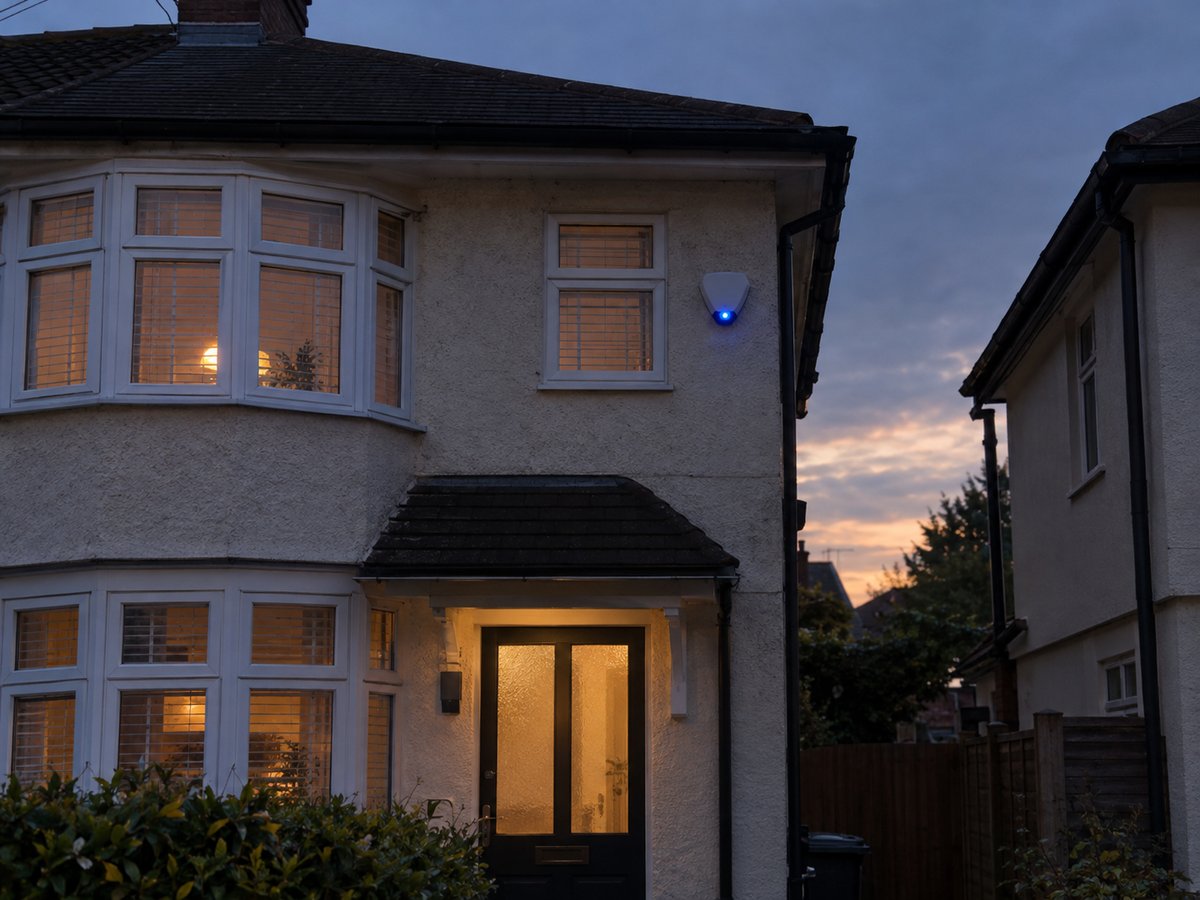
When the bell does stop, the light on the bell box usually keeps flashing until someone enters the code at the keypad. That is normal. It shows which property went off.
If a neighbour's alarm won't stop
- Give it 20 minutes. Most alarms cut out by themselves well within that.
- Look for signs of a break-in. If you see one, or think someone is inside, call 999. Don't go in yourself.
- Try the neighbours or their key-holder. Many people leave a key with someone on the street.
- Look at the bell box. The installer's name and phone number are often printed on it, and the company may be able to reach the owner.
- Report it to the council. Contact your council's noise team, especially once it has gone past 20 minutes non-stop or an hour on and off. Some councils run an out-of-hours noise service, so check the times on their website.
Don't touch the bell box. Opening it or pulling at it usually sets it off again, and it is not yours to interfere with.
If your own alarm keeps ringing
If the bell rings for longer than it should, or the alarm keeps going off while you are out, have it looked at before the neighbours or the council do it for you. The usual causes are:
The bell time is set wrongly
The control panel decides how long the outside bell rings. An engineer can check the setting and make sure the bell stops within 15 minutes.
The bell box is faulty
The bell box has its own battery and is designed to sound if its cable is cut or its cover is opened. A failed battery, a damaged cable or water getting in can set it off on its own, and sometimes it will not stop when you enter the code. Older bell boxes are the usual suspects.
A sensor keeps setting it off
Spiders and insects in movement sensors, pets, curtains moving in a draught, heaters coming on, and doors or windows that do not quite shut are the common culprits. A service usually finds which sensor it is.
Nobody can get there to stop it
If you are away, leave a key and the code with someone nearby and show them how to silence it. If the alarm sends notifications to your phone, make sure they still reach the right person.
If the keypad is beeping or showing a message as well, our guide to why a burglar alarm beeps explains what each warning means. Most of these faults are found at a routine service, so it is worth knowing how often a burglar alarm should be serviced.
Alarm keeps going off in West London?
Ignis Secure is based in Uxbridge and services and repairs burglar alarms across West London, including systems fitted by other companies. An alarm that keeps ringing rarely needs replacing; it usually needs a battery, a sensor or a setting put right. Send us a photo of the keypad and the bell box on WhatsApp, or see our burglar alarm servicing and repairs page. We have local pages for Uxbridge, Ruislip and Hayes.
Frequently Asked Questions
How long can a burglar alarm legally ring for?
In England no law sets an exact limit. The council can step in once an alarm has rung for more than 20 minutes non-stop, or on and off for more than an hour, if it is likely to annoy people nearby. Police policy says an outside bell should cut out after 20 minutes, and modern bell boxes stop after 15 minutes at most.
Can the council break in to turn off a burglar alarm?
Not without a warrant. A council officer can enter to silence an alarm that meets the 20-minute or one-hour test, but not by force. To force entry the officer needs a warrant from a magistrate, and must leave a notice at the property before applying for one.
Who pays when the council silences my alarm?
You do. The council can recover the costs it reasonably ran up getting in, silencing the alarm and securing the property again. It recovers them from the occupier, or from the owner if the property is empty. The officer does not have to set the alarm again afterwards.
What should I do if my neighbour's alarm won't stop?
Give it 20 minutes, because most alarms cut out by themselves. If you see signs of a break-in, call 999. Otherwise try the neighbour or whoever holds their key, look on the bell box for the installer's phone number, and if it carries on, report it to your council's noise team.
Why is the light on the bell box still flashing after the alarm stopped?
On most alarms the strobe keeps flashing after the bell stops, until someone enters the code at the keypad. It shows which property went off and is not a fault.
Do I have to register a key-holder for my alarm with the council?
Only if your council has made your area an alarm notification area. Then you must nominate a key-holder within 28 days and give the council their name, address and phone number in writing. For a home, the key-holder has to be someone who does not live there, or a key-holding company.